


At this time the only reliable gauge to judge the effect of the Coronavirus in Germany is the number of people who die per week. None of the numbers related to Corona are actually known. This graph was taken from the Statistischen Bundesamt, Deutschland (https://www.destatis.de). It was used to try and hype the situation during the last few weeks while it lend itself to do so. The latest 'preliminary' version was released much more quietely and is actually pretty reassuring. Of course, this holds only for Germany. So next week, it looks like, there may just be LESS weekly death than expected from the average over the last 4 years. This already happened in the Netherlands(Holland) two weeks ago. Also, the extra scary Coronavirus caused clearly a smaller total of excess deaths in Germany than the fairly unnoticed flu season during early 2018 so far. But at what extra cost.
The graph is modified but gives the unmodified published curves. Follow the link to where the original plot(s) were hosted.
It will take time to fully understand all the involved factors. Are there correlations, and if so what would they be, with age, sunshine, smoking and beer consumption, to just mention a few crazy ones. Even if a way to treat/prevent this strain of virus is found, so what about the next new (or mutated) version? How to justify the expensive measures taken to protect a rather small select group of the 7+ billion earth population? Certainly not the poor. And how about the new crazy normal?
With a focus on particle and nuclear physics as well as cosmology. A personal selection of old and new science related topics not ireally limited to physics. However, if you are looking for non-scientific crazy stories, like permanently energy producing Tesla coils or such, this is not the right place. Todays internet has brought a wealth of information to almost every one's doorstep. A side effect, certainly a surprising one to some dinosaurs of the early web, is the enormous new task to decide if information is honest/real. Not correct or false, that is. A startling concept in context of science really, as science by definition is reproducible. So, as a first simple measure to weed out bad science, let us think only of statements/findings/facts as honest which can be reproduced. Sometimes even this isn't easy to do. And we require honesty before we accept scientific facts. Of course, there also is no room for alternative facts.
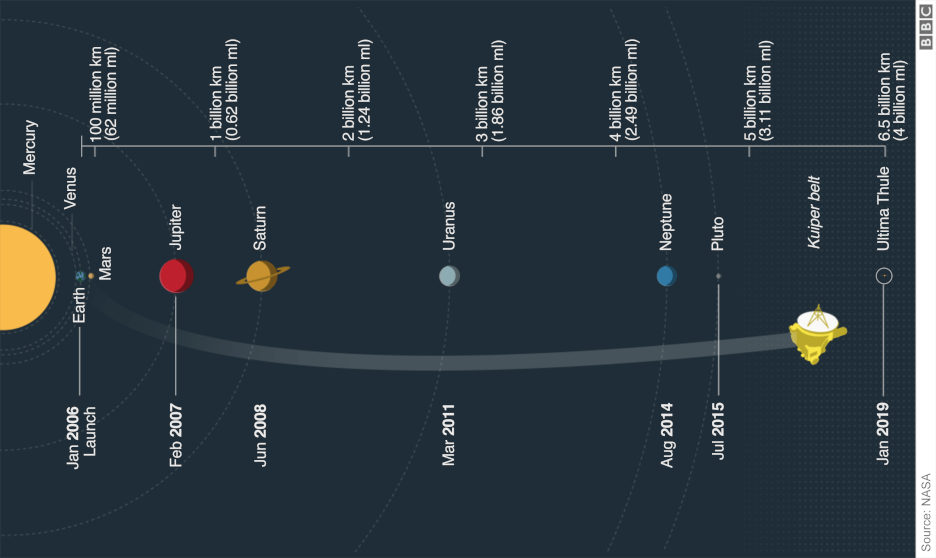
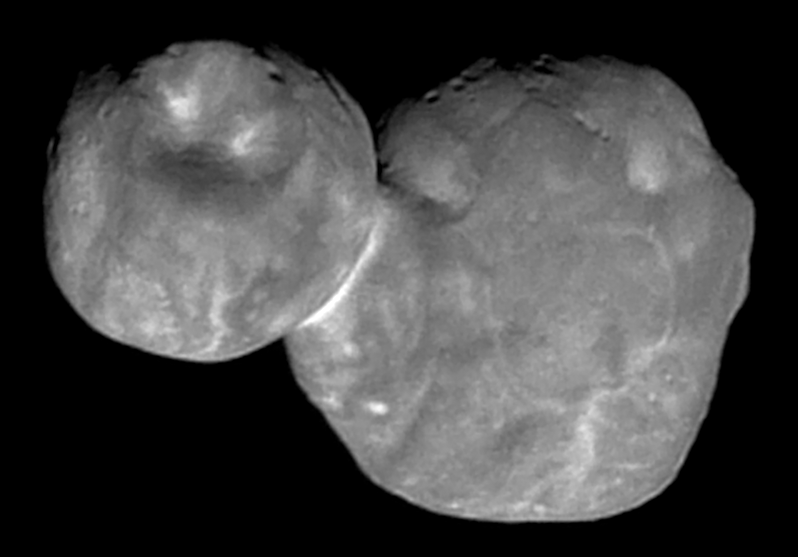
Just presenting a photo of the latest cool new information available about our solar system. Actual images were taken of a small icy object some 4 billion miles away from earth and sent back. This is pretty incredible. A radio signal takes somewhat more than 6 hours to travel that far! Which compares to a mere 8 min 20 sec to reach earth from the sun.
An initial list of subjects to look into. Will be flushed out in time.
Pollution was supposed to be the title of this section, or maybe nature. As it stands, Spatzen are a relevant issue touching on both. It was a very slow process of recognizing the absolutely obvious. But lets start at the beginning.
Over the many years one has learned to live with warnings about endangered species. In particular the large members of this group like elephants, rhinoceros, lions and tigers, or whales and tuna. Of course these usually live far away and offer many easy reasons to list, economical and social, for their unfortunate situation. Then, much more recent and closer to home, bees are hit with problems. The threat to bees does make the press since these insects are useful, that is, they are employed as an agricultural commodity. Why does nobody mention wasps in this context anyways? Regardless, the public is aware now. And of caurse there are more, not to mention frogs for another example.
So there is a pattern.
Growing up in Germany one gets used to birds being around. More species during the summers somewhat less in winters. And bird feeders placed on balconies in winter to help out. It makes for a very warming pasttime to just watch them pick up seeds - and there were 'Maisen Knödel', special ball shaped feeding contraptions to help Maisen, as they were outnumbered by ruffians: Sparrows for example, or Spatzen in German.
Spatzen were literally everywhere. They did come up when sitting out in summer at a restaurant and pick up crumms. And they were very present at bird feeders. Not so anymore. Spatzen basically disappeared completely from the scene in München - and outside of a much smaller villages as well. So what happened and when?
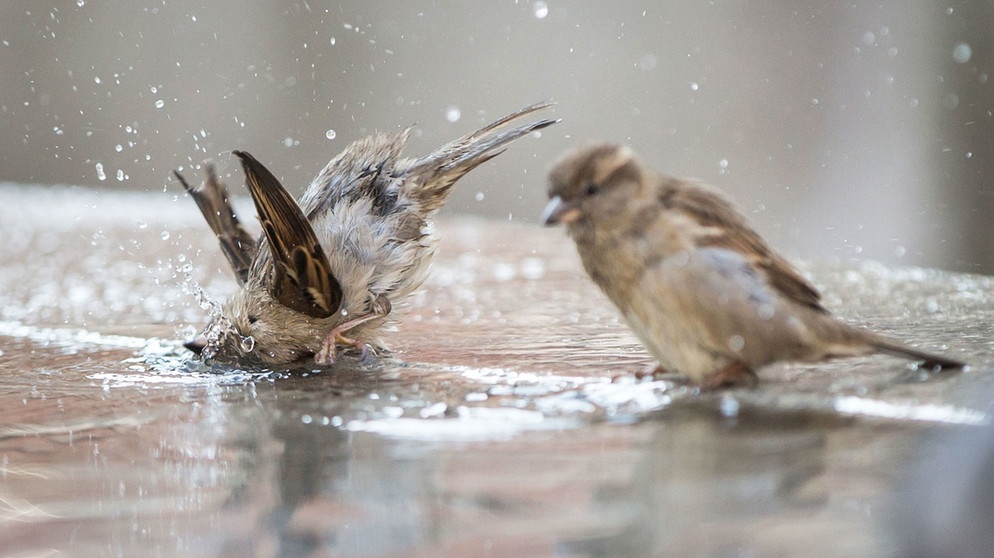
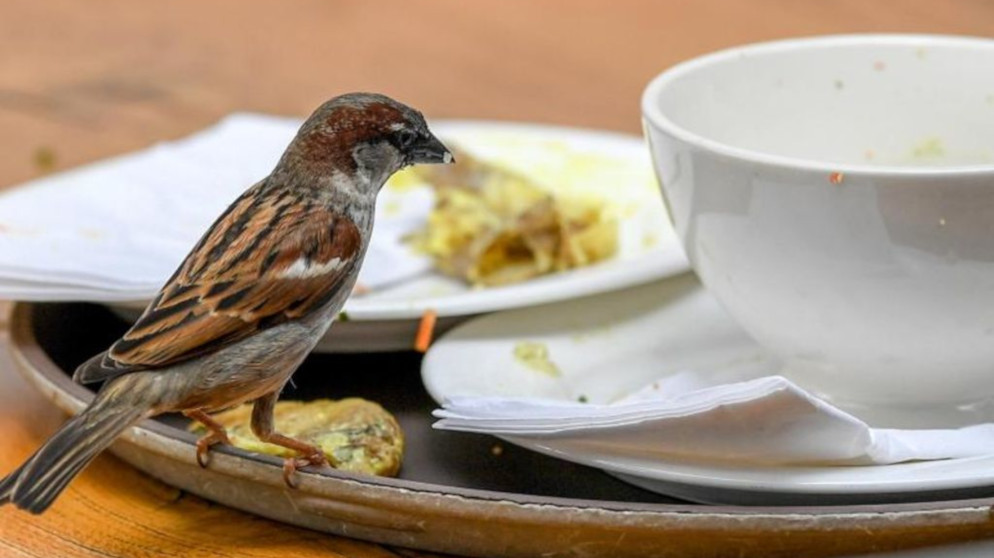
The two images link back to their more recent respective articles from Bayerischer Rundfunk and Münchner Abendzeitung addressing the change.
I used to considered them favorites and took quite some Spatzen photos. Unfortunately digital cameras were not available then.
Predominantly pollution of the air by cars in urban centers will be the initial focus of this thread. Naturally, this instantly ties into the issue of public transport and individual mobility on a much larger scale. Let's just say that Germans really like their cars. And this trend seems to hold not only for Germans, despite the fact that climate change is certainly in an advanced state of reacting to human output.
Munich is an example of a modern European city with a population of approximately 1.5 million residents. It features a rather well working public transport system, albeit somewhat expensive. As for other large cities within the European union, its pollution levels, driven up by private traffic and diesel cars mostly, have soared and crossed legal limits. Of course politics is aware of the issue. But it is also true that there are always large money interests at stake when cars and fossil fuels are involved. Not to mention local car manufacturers.
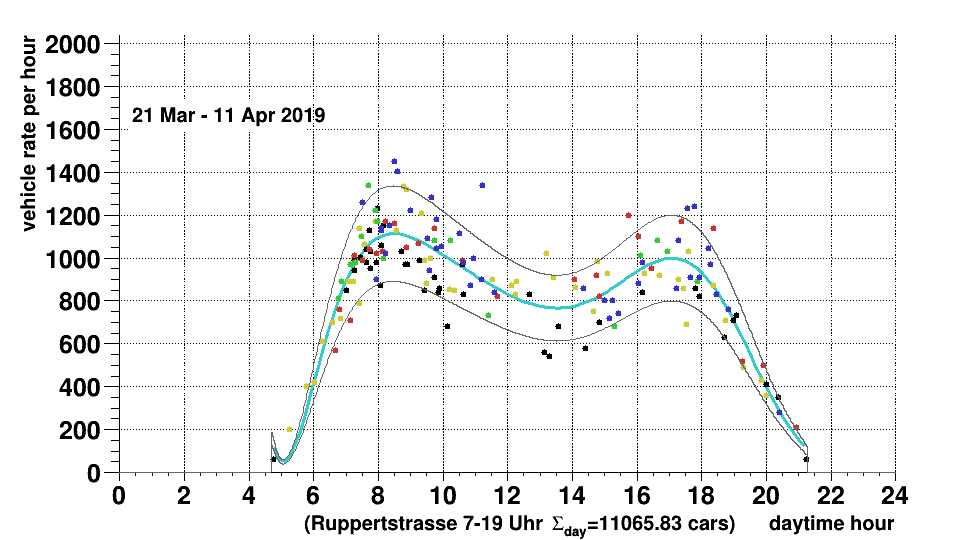
Lets avoid to judge how much damage is caused and exactly how at this point. Focusing on a simple and easy to understand specific example might help to get some insight and a feeling for the magnitude of the issue. The statistics for a single intersection, close to the center of Munich, during a regular week day will serve as a starting point here.
One particular issue to take on. This site is currently powered out of Germany where lung cancer is the 3rd most frequent form of cancer. Of course, Germany is still a place with a large number of smokers. As it turns out though, a good fraction of the lung cancer cases are officially attributed to the presence of radon in the air. And this holds even more so for smokers.
Radon itself is mostly just a mediator.
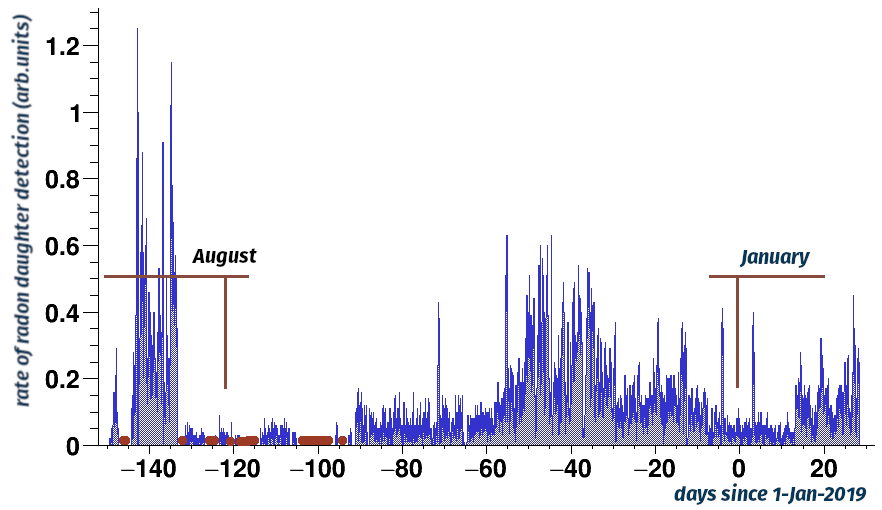
There are several isotopes of radon which are of interest but the information here pertains to 222Rn, a decay product of uranium. Uranium is present in the ground everywhere on earth in varying concentrations and poses no problem, as it remains down there. Unfortunately, it will decay into other elements and eventually turn into radon. Radon is a nobel gas and as such will move around easily and may exit from the ground.
The graph gives the rate of detecting two of the decay daughters of 222Rn, which are pollonium isotopes 218Po and 214Po, over the course of 5 month. More details about the measurement, which was performed in the bedroom of a second floor appartment close to the center of München, and the obtained spectrum will follow. A large variation in the relative rate is apparent and the factors driving those changes are not trivial to identify.
This section is dedicated to riding bicycles. Originally for fun/sport of course. However, in addition, as a means to reduce pollution. Every bit counts. And, since there is also the health angle to this physical form of exercise, the potential benefits to society and the self are explored in more detail here.
Making use of bicycles to get from point A to point B really only is an option because of the gigantic infrastructure which was put in place for motorized transportation systems - cars and trucks. The benefits of biking to the system and the self are increasingly recognized however and city centers, like London and Munich for example, are adapting their infrastructure.
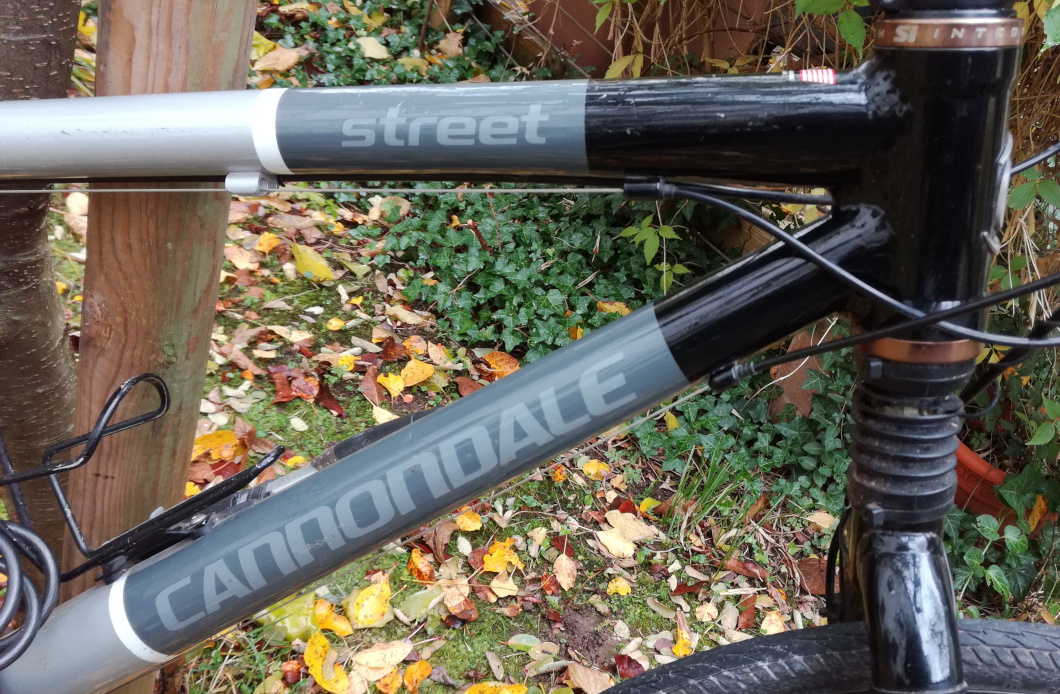
The current bicycle was obtained used about 6 years ago. It has been through quite some adventure. Extremely reliable tool which was made sometime during 2008. Rather light carbon composit frame. For a few years the bike performed in and around Little Rock, Akansas. In August 2015 it moved to München and is being used throughout town and sometimes to enjoy the beautiful surrounding countryside.
Information